
.jpg)
In this article, Steve Rowe reframes legacy as more than money, focusing on the emotional imprint we leave through our values, memories and the way others feel about us.

Recently, I’ve been musing a lot on the legacy I would leave. Largely because I have so many conversations with people about them wanting to reduce Inheritance tax and “protect their legacy”. But for me it's more than that. What’s my life been about?
"We are survival machines - robot vehicles blindly programmed to preserve the selfish molecules known as genes... They are in you and me; they created us, body and mind; and their preservation is the ultimate rationale for our existence".
- Richard Dawkins, The Selfish Gene
Well, I’ve failed there Richard! No children for me. Obviously indifference and idleness were my genes’ main driver! It’s sad when you realise evolution is trying to do away with you!
No doubt this biological fact is a lot to do with why we want to protect our children, preserve financial legacies for them and enquire on ways to reduce inheritance tax.
What is the definition of ‘legacy’, from the Oxford English Dictionary:
- An amount of money or property left to someone in a will. “my grandmother died and unexpectedly left me a small legacy"
- The long-lasting impact of particular events, actions, etc. that took place in the past, or of a person’s life.
Of those definitions, I think the second is most important to me. Having dealt with plenty of people that have inherited money I know that they either - spend it on frivolous things rather quickly, or, never spend it as the emotional ties that come with that money are too much to cope with.
Being a polyglot (mild porkie there! I am more poly-clot than poly-glot) I went to my bookshelf of dictionaries and reviewed definitions in different languages, and these are the most Interesting I found:
Hindi - Virasat (विरासत): This word encompasses both tangible and intangible gifts. It is frequently used to describe emotional heritage, such as traditions, values, or memories, which are received and then passed forward.
French - Héritage (Cultural Context): Beyond material goods, French héritage often carries a sense of spiritual or cultural stewardship; the "soul" of a family or nation.
Arabic - Irth (إرث): While it can mean inheritance, irth carries a deep connection to family and tribal traditions, representing the passing down of ancestral wisdom, reputation, and responsibility. It suggests a living duty, not just a static gift.
Welsh - Hiraeth (Conceptual Legacy): While primarily meaning a deep longing for home, hiraeth is often used in the context of a nostalgic, sometimes painful yearning for a past era or a departed loved one, acting as a personal, emotional "legacy" of memory.
I think these are the ‘legacies’ we should all be focussing on. It is so so easy to make a financial one and we will be looking at that in a moment. The hard stuff is the emotional legacy, your mark on the world.
On Thursday, myself and our advisers went to a conference put on by the investment platform Fundment, which we use for some of our clients. Professor Brian Cox was talking and he told us how massive the universe is and how insignificant we are. But that our lives still matter (this might also be a science joke in that we are ‘matter’!)

And you do matter! Which is why you should be concentrating on the emotional legacy, the soul of your family, and the yearning people will experience for you when you’re gone.
In terms of my legacy, I’ve been wondering what that may be. As discussed, my genes are going nowhere. I can’t write a song or sing a tune. And I don’t make anything physical (although I can bang out a great loaf!). I know my work changes people’s lives, but that’s not always something anyone else will know, due to data protection! But here are some examples:
• "Steve, if you hadn’t have done what you did, we would have been divorced by now"
• "I’m so happy in my home and I never would have moved if you hadn’t have pushed me!"
• "Steve, I thought my wife made awful tea until I had yours, now I am more grateful."
I’m less proud of the last one, but they are wrong! I make great tea.
Another legacy I might have is in the people that work with me: how to think about financial planning, how to present it etc. But people forget! Or the things we do that aren’t done anywhere else, will become the norm. That would be a great legacy. I’m not holding my breath though, there’s a shortage of 'vision' out there.
I’m having yearnings to write something, a more permanent record. I think I’ve got a book in me and it would be nice to think that in 100 years someone may still read it. I recently picked up a book my friend Matt’s grandad wrote in 1939-ish. It’s been rediscovered by someone from only 4 surviving copies… the first and only book run of around 700 copies got bombed in a warehouse at the start of the war! He’s gone, but his words live on! It also provides proof the genes don’t always live on, as Matt is borderline illiterate 🤣! (Love ya, Matt! I just couldn’t resist.)
Look it up, it’s a horror! ‘Dark Sanctuary’ by HB Gregory
Growing your legacy
Legacy isn’t just about money, it’s about the memory of you. What are you leaving behind? Good feelings or bad? Simplicity or aggravation?
Wouldn’t it be great to leave behind a legacy of positivity for future generations far beyond your children. Consider the Victorian philanthropists, such as George Peabody, that established a trust with £500,000 (£55m in todays terms) to improve housing for the poor. It’s still going.
George Peabody was an American banker! Turns out they’re not all bad!
I ask you to think about this, not in a morose manner, for it’s not about when you are gone, for you, it’s about what you will do whilst you are still here and in the time you have left.
Which of the above definitions of legacy suits you best? Oxford English number 1 is the cop out! Is your preference Hindi, Welsh, Arabic or French. In my thinking, I am taking a little from each.
Protecting your legacy - cold hard cash-wise
I promised I would get to this and here we are. I am going to focus on one thing here, as I think people are having a mental block about it.
Pay the inheritance tax bill with the proceeds of a life insurance
We have been talking about this with clients for well over a year now, since the announcement of inheritance tax being applied to pensions. Yet very few people have accepted the advice to do it. And, to be quite frank, I don’t understand why!
Ben Franklin once wrote:
“… in this world, nothing is certain except death and taxes”
Two things ARE certain. You are going to die, and you are going to pay tax on the way there and on the way out!
What’s the concern about inheritance tax? Is it because you just don’t like the idea of tax, or is it because you want your kids etc to receive as much money as possible? I am assuming for most it’s the latter (and unless we become political activists we can’t do anything about the former!)
You need individual advice for the type of life insurance best for you, but in the following case I am talking about whole of life insurance.
Let me bluntly tell you some facts:
- No life assured of the life assurance policy is ever there to see the pay out… they do not see the good it does, as they are dead.
- No-one, except the never pitied financial adviser, sits with a widow where there was no life insurance and has to see the financial turmoil and anguish they are in and will go through… knowing that there was such a cheap and easy solution.
Why you should want a whole of life insurance policy for inheritance tax planning:
- A whole of life assurance pays out WHENEVER you die. Provided you keep paying the premiums. It is therefore entirely within your power to ensure your inheritors benefit from the payment.
- It has the least effect on your lifestyle. You don’t have to gift massive amounts of money away like other solutions for inheritance tax. It’s a monthly premium.
- But Steve, it’s expensive.
It’s not as expensive as the large inheritance tax bill it will pay for, is it!?
- But Steve, I don’t believe in insurance.
Yet you have it on your car, your house… Besides, saying you don’t believe in it is like saying you don’t believe in contracts. Because that is what it is and they definitely exist! The ABI (Association of British Insurers) reported a 99.99% pay out rate.
- But Steve, they must be making money from me because how can the insurer pay out more than the premiums:
Because some people stop paying the premiums so those policies lapse. Also, the money is invested by the insurer and they earn money with that.
- But Steve, I’ll apply for it in a few years.
Er, you might be dead then. Or uninsurable as your decrepit body has given way to something that seriously impacts your life expectancy.
Here’s the truth, and it’s from one of the most famous life insurance salesmen ever, Ben Feldman. He has record for selling the most life insurance in history, working from 1942 until the early 1990s
“I do not sell life insurance. I sell money. I sell dollars for pennies apiece. My dollars cost 3 cents per dollar per year."
- Ben Feldman
The solution is simple. If you want to leave a large inheritance, then get an insurance. If you think as a family, instead of just your own personal finances, you are way more likely to be able to leave the children more money by doing this. As a whole, you’ll most likely be better off.
We will combine this amongst an estate plan that encompasses all your finances to ensure you are taking advantage of all possibilities.
Advantages:
It will definitely pay out (assuming you told the truth on the application and paid all the premiums)
If you are one of our typical clients:
• You’re going to have an inheritance tax bill
• You have more money than you will ever need
• The beneficiaries can use it to pay the inheritance tax bill
• You have to live a long time before you would have lost money (I’ve done the calcs!)
• You don’t have to make any other changes to your finances
• You are buying your family money at a discount!
Anyone sceptical that we are doing this for commission should understand:
• This is the most boring thing we do and we don’t have fun doing it!
• It’s fiddly and takes a long time
• I don’t like having to hear about your medical conditions - haemorrhoids, warts, history of venereal disease etc. I didn’t want to be a doctor for a reason!
There are tonnes of rational and practical reasons for doing this and it meets your goals - to leave the most money to your children. But it’s not being taken up. What’s your reason?
If you’re ready to talk about this, do contact us because it’s a great and workable solution. If we get these things sorted, then you can go and concentrate on your most important legacy:
“Physically, life is short, but the feelings we leave behind in others can live on for a long time.”
- Keely Woods, Chartered Financial Planner
In other Lucent News...
New members of the Lucent Financial Planning team
We have three new members of the team following Stacey leaving us at the end of last year. I am megatastically excited about this as I feel we now have, for the first time in a long time, a full team! And I am now resolving not to work weekends ever again, just so we can keep up.
New Adviser - Melissa Henderson
In the last month, we have had a new adviser join us at Lucent Financial Planning due to the increase in demand we are having and my ever-increasing blood pressure!
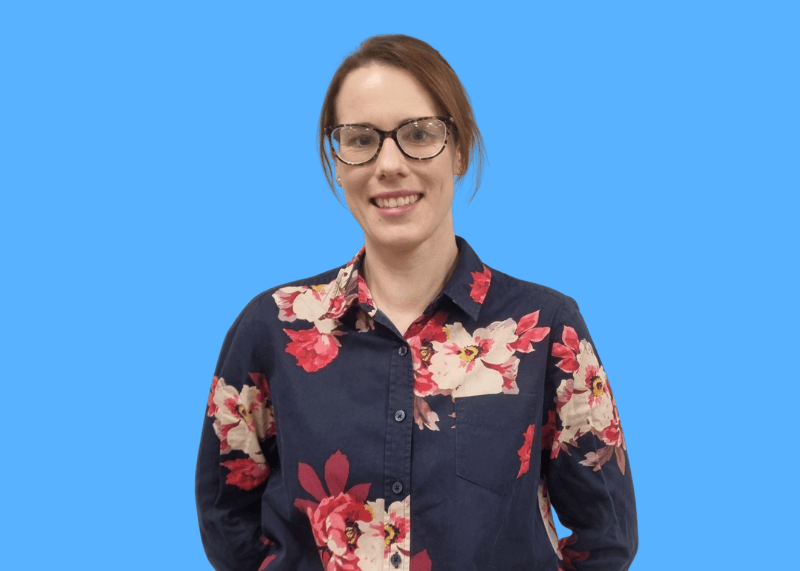
Melissa Henderson, a Chartered Financial Planner of too many years to mention, is excited to meet you and join a firm that focuses on clients’ lifestyles rather than cash.
Client Experience and Business Analysis Managers - Aline Nguyen & Becky Smith
Becky and Aline have both joined in the past couple of months and are already making a massive difference! Not only for introducing a uniform colour of beige to their team! They have super interesting backgrounds that you wouldn’t expect to be working at a financial planning company - this is because we are always looking for that difference or the edge to make us that little bit better!
I know you will all join us in giving Melissa, Aline and Becky the warmest of welcomes, and they're looking forward to meeting you in the office and at our upcoming events!
Disclaimer: This article does not constitute financial advice. We recommend that you speak to a qualified financial planner for advice tailored to your individual circumstances and goals. Financial markets may go up or down, and you are not guaranteed a return on your investment. Past performance is not necessarily a guide to future performance. Financial details including benefits to the treatment of tax will depend on your individual circumstances and, while checked at the time of publication, may be subject to change in future.
*When clicking a link to an external website, Lucent Financial Planning Ltd cannot be held responsible for the content of the external website.


.jpg)



.jpg)