

You cannot heal or reduce grief, but you can remove the hassle around it.
In the month after the world lost Dolly Parton, it seems fitting to look at grief, something we have or will all experience at some point in our lives.
“We cannot direct the wind, but we can adjust the sails”
This is not to be maudlin, this is to celebrate lives that have touched us and as a company with ‘planning’ in its name, review how we can help ourselves and our loved ones cope in the times of deepest sadness.
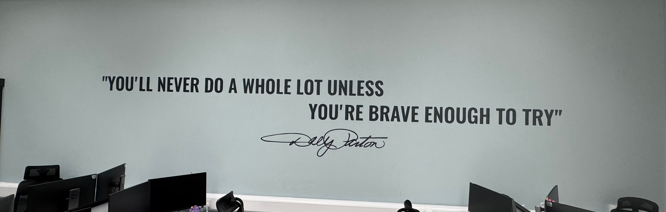
Dolly was important to us as a firm. One of her quotes is painted on our wall and she is a mascot of the advisory team!
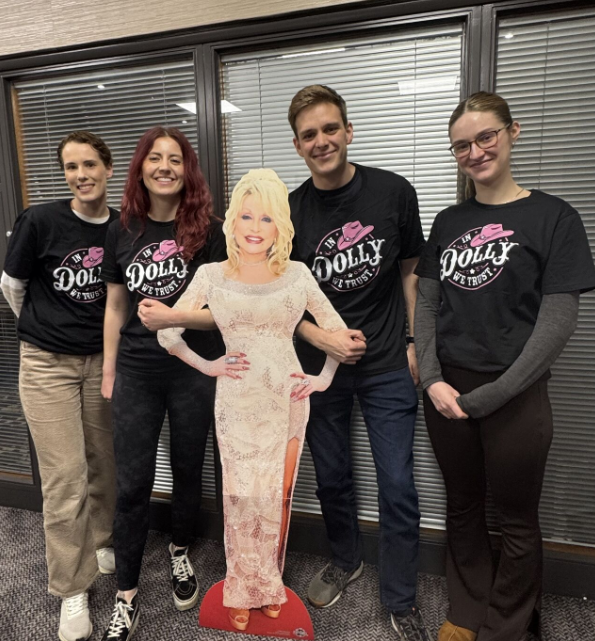
Dolly really was wise as well as musical and we celebrate her songs and quotes as we celebrate her life. Thank you, Dolly! You have had a massive impact on us and the world.
Like Dolly, we want you to adjust your sails. There are things we cannot control. We know that life is not a rehearsal and we cannot control how long we are here for, or tax rates, or how long our loved ones are around us, or financial markets. But we can influence some of those things, and/or react in the best way possible.
“Give sorrow words; the grief that does not speak knits up the o-er wrought heart and bids it break.”
- William Shakespeare, Macbeth
We don’t talk about ‘grief’ much, do we? We all acknowledge it is there in some way. When we learn of someone’s death we send flowers, cards of condolence, chocolates and best wishes to their nearest and dearest immediately afterwards. During the ‘shock’ of the event, when the grief is most visceral and those affected are walking around like zombies not knowing what to do, how to feel, or able to function in any way normally. After a couple of weeks and certainly the funeral, the cards and flowers dry up. It’s done now. They’re in their grave and it’s time to move on.
“Maybe send flowers or chocolates 6 months after the event, the anniversary or 2 years?”
But those most affected cannot move on so quickly. We avoid talking about the deceased for fear of the grief erupting in tears and sadness. That visibility to us feels like we have upset them but… it’s there even if you can’t see and feel it.
“The reality is that you will grieve forever. You will not ‘get over’ the loss of a loved one; you will learn to live with it. You will heal and you will rebuild yourself around the loss you have suffered. You will be whole again, but you will never be the same. Nor should you be the same nor would you want to.”
- Elizabeth Kübler-Ross and David Kessler, On Grief & Grieving
I can recommend reading Elizabeth Kübler-Ross’ book, by the way: “On death and dying”.
As we have seen we avoid grief in others as we feel awkward or that we are upsetting them. How can we spin this though? Surely, we would all like to be grieved for when we are gone? We wouldn’t want people to grieve us, as we wouldn’t want ourselves to be the cause of their upset. But wouldn’t we like to know that we have had such an impact on someone that it’s worth them grieving for us? That our actions, presence and love have helped them in life and that they will miss us so much that life won’t be as good for them with us gone as it was with us?
Perhaps we have two choices in life.:
- Spend your life being a selfish a-hole, so no one grieves you when you’re gone.
- Spend your life helping others so that you are loved and missed. This will mean more people will be upset when you’re gone but your life’s impact will have been greater.
I guess you marvel at the level of profundity I reach, don’t you?
I think most people would choose no. 2. I try to and here’s why: I want my one and only life to have impact.
Think about that. Who can you help?
“Grief is the price we pay for love”.
- Dr. Colin Murray Parkes in his 1972 book Bereavement: Studies of Grief in Adult Life
Our value can be measured by the sadness we leave behind, but you can make that better too! Grief is hard enough work without leaving people to deal with loads of additional administration too. Here are some examples:
Financials
- Millions of bank accounts
- A diverse range of investment accounts
- No understanding of pensions arrangements
- Insurances - who for, why and what are the trust arrangements, if any
- Wills - where are they? Who are the executors? Contact details of executors. What are your intentions and why?
- Inheritance tax bills - do you know that tax has to be paid before anyone gets money from the estate? Where are they getting it from? You know that delayed payment of inheritance tax gets interest charged at 7.75%?
- Loads of rental properties which take an age to sell, or are effectively handing a full-time job of being a landlord to someone. Thanks!
Good reasons to have such a spread:
I know you think you are managing your finances well in life by having multiple bank accounts / investment platforms / shareholdings / pensions.
- You say you’re spreading the risk
- Maximising FSCS protection
- Etc
“Efficiency is doing things right; effectiveness is doing the right things."
In reality, you could obtain all this and more much more simply. It’s better for you in life and for the executors of your estate in death:
Better in life:
- It will cost you less in charges.
- It will cost you less in suboptimal returns on your investments.
- You’ll have cleaner tax reporting - less time spent amassing all the tax certificates.
- You’ll understand what you’re worth: this is key for making financial decisions. Numerous accounts mean you don’t know what you’re worth and therefore spend less or spend more than you can afford.
- You’ll save time. Loads of it.
Better in death:
If you’ve ever been involved in dealing with an estate that is more than a few things - you’ll know it’s a nightmare!
If you’re lucky to have avoided that so far, you will realise how hard it is dealing with a few companies and the effort it takes anyway, when it’s your own accounts! Imagine not knowing much, like account numbers or policy references.
Now that’s the easy bit over. Er, Steve I thought that was the hard bit!
No, not really. Financial companies have processes and are used to dealing with people who don’t know anything, and are shocked and distressed too. And when they do it everyday, you’re just another upset person on the phone.
Here come the really hard bits that you and no one else will deal with:
- Funeral arrangements – have you made any? Have you prepaid a funeral?
- Have you got a commemoration service set up with:
- List of people to invite?
- Their contact details?
- List of people to invite?
- Having to contact them all and explain what happened - imagine reliving that over and over.
- The funeral director.
- Details of what has been prepaid with them, if anything.
- Songs to be sung or played.
- Poems to be read.
- Who you’d like to talk about you.
- What sort of wake you want?
- Where you’d like that?
- Free bar or not?!
- Beef wellington or jellied eels?
- Which solicitor wrote your Will?
- Where the Will is stored.
- What happens in the Will and why? Tell people your intentions, as if all they get is the legalese they may feel hurt by that.
Did you know that if you found the body of a dead relative you are responsible for ensuring it’s picked up by an undertaker once death has been confirmed? It would be handy to have the details of the funeral director you intend to use then, wouldn’t it?
It’s incredibly hard to set all this up when dealing with grief. People are trying to guess what you wanted and how you would have liked it.
Talking about it
"Unexpressed emotions will never die. They are buried alive and will come forth later in uglier ways."
You avoid it because it’s hard to do… but it’s a lot easier when it’s your feelings, and not other people trying to interpret them when you’re in the fridge waiting to be cremated / buried/ left to science…
We need to talk about this with our families and those closest to us. It’s hard. Really hard. But the hardest conversations are the most rewarding.
For those with children I am sure you have spent most of your life trying to shield them from pain and have the easiest life possible. Do the same in your death.
By having these difficult conversations, you will ensure when they are immersed in shock, they know what to do. Because they have practiced with you when it was easier (not easy, but easier than when it’s happened).
You have done a lifeboat drill with them.
- If they find your body, they know who to contact.
- They know where you want your funeral and what you want to happen to your remains.
- They know who to invite and what you want everyone to do at your funeral.
- Winding up your estate is as simple and pain free as possible.
You’d want that for them, wouldn’t you?
To all those paying the price of love and living in grief, whether newly collapsed into it, surviving with it from long ago or perhaps the grief of knowing that it may be coming soon, I leave you with the words of Bob Marley:
“You never know how strong you are until being strong is the only option.”
Our solution
This summer we have started a plan to create several ‘lifeboats’ for us to plan around with you. Your death will be one of them.
This is because there are nasty and brilliant things that can happen, or definitely will happen, in life, and we want to prepare you for them. They are going to include:
- Death of yourself or partner
- Serious illness
- Philanthropy
- Long term care planning
- Retirement
- Family Office
These will be fully financially planned of course! But it’s the psychology behind it all that’s important. Your reticence to review some of these things is probably making what you most fear more likely to happen. Let’s draw a line in the sand on that and really think about what you want, in a structured and safe manner. Because, one day you’ll be forced to, or others will have to do it for you.
Interesting things
Paying for inheritance tax by subscription
I was discussing with a client recently about inheritance tax and how the main options to reduce it are:
Spending it - instant reduction! If you are likely to have an Inheritance tax bill, then view everything you may want to buy as having a 40% discount due to the tax saving it would incur. You might think differently and get it!
Give it away - but this means you need to live 7 years on larger sums.
There are other ways that are more complicated, but they essentially involve using other exemptions or investing in things that are exempt.
Another way is paying for the inheritance tax bill. It’s possible to do something where:
- There is very little disruption to your other finances.
- You pay the cost each month - it’s a bit like paying the bill by subscription or renting a telly from Radio Rentals!
- For most people, they need to live until they are about 92 for this to be more expensive than not doing it. 1 in 4 people live to 92…so the chances are it’s better to do it than not.
- You could even get the kids to pay for it! Since they’re the ones that are going to benefit from it.
Interested? Get in touch with us for a full inheritance tax planning session and this would be one of the things we look at.
Juggling Mind and Money
Are you interested in learning more about the other people at Lucent Financial Planning apart from your adviser?
If so, take a look at these:
In episode 46, Hannah Knight Niblett our Chief Operations Officer talks with me about all the stuff people don’t see.
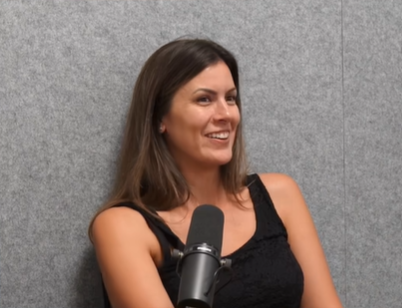
Look at her cheeky little face!
And coming this Thursday 10th September there’s Ellie Pemberton. She’s our youngest adviser but you wouldn’t think so! She discusses with me how she experiences ageism and sexism through the prism of wanting to help people.
Ellie and Steve tackle…
We are launching a you tube series soon called “Ellie and Steve Tackle…” This will be an in-depth but conversational series on a certain subject. The first one will be inheritance tax planning! We’ve started working on it and it will be launched in the new year.
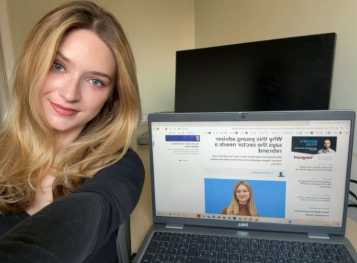
In the meantime, the latest episode of Juggling Mind & Money, episode 47, features Ellie, and will appear on our podcasts page (and wherever else you get your podcasts) towards the end of the week:
Here’s Ellie looking at pictures of herself on the internet (she was in the ‘paper’!)
Variety Night
This event in October is for clients only. We have hired the Studio at the Core Theatre in Solihull to showcase different things people can do in retirement… or any other time quite frankly!

It’s hosted by the magician Ben Hanlin of TV stardom and will sure to be an entertaining, laugh-filled evening, as we also have a comedian and another presenter doing humorous stories… plus we will be messing about too. Here’s what we have been messing about with on AI to advertise it… more coming soon!
Until next time, my friends, enjoy yourself it’s later than you think.






.jpg)