
Let’s start with a simple question: What will actually be remembered when you’re gone?
This month, Steve Rowe explores how its not just about money, its about the conversations you had, the choices you made, and the impact you left behind. With inheritance tax changes coming next year, now is the time to think about more than just numbers, including how the hardest conversations are often the most important ones.

We recently had our 'leaves and legacy' event focusing on... leaving a legacy! As financial advisers you may think that we would be focusing on inheritance tax mitigation and of course, that did make up a good proportion of our event. But a true legacy is much larger than a wedge of cash. And frankly much more important.
When our toes are curled up, our clogs are popped and our dust has been bitten, what will truly be left behind as a memory of you?
Peter Gate of Meridian Private Client Solicitors spoke to us about ‘dying tidily’. This is one kind of legacy that is often left behind: a mess. A slew of accusations and maybe a ruined family relationship or two. You can read a summary of Pete’s presentation here.
The big takeaway from Peter’s address was that you should talk to your family! No, not the normal rye banter and mickey taking, but the important stuff that’s hard to say and listen to, but once you do it, you’ll be glad you did. Later on in the newsletter we will look at why this is so hard - but we can help you navigate these conversation if you wish.
In a similar vein, Sam Hart of Rosegate Tax got down to the nuts and bolts of how inheritance tax works and what can maybe be done about it. She discussed inheritance tax exemptions, gifting, gifting to trusts and how the bill would be paid. Apart from those elements, we would also add that you can invest in inheritance-tax-efficient investments, and/or effect an insurance policy to meet the bill when you die too (perhaps the simplest if you can get cover). You can read a summary of Sam’s presentation here.
This month’s newsletter focuses on pensions. And as summer approaches, we finally got a technical note form HMRC on the incoming inheritance tax on pensions from April 2027 - the full version is here... but there's a lot there, so I have also summarised it for you here
So what next?
It’s clear there is a massive problem on the horizon for many people regarding their pensions and inheritance taxes. We will be discussing this with all our clients at annual reviews, but firstly we are asking you to decide something.
Are you bothered?
Of course you are bothered and would prefer it wasn’t happening, but it is happening. So are you bothered enough that you want to do something about it? This is very important because when it comes to inheritance tax planning, the person that will die and leave the large inheritance tax bill is the person that can do something about it. But, you will feel all the pain in changing your affairs to be more inheritance tax efficient and reap none of the benefits as you will be on the escalator to heaven. Or being chewed up by beetles, whatever your religious convictions are or aren’t.
And as we have seen, making such changes is also really difficult emotionally, because it requires conversations you would rather not be having, with children and other relatives, and potentially denying yourselves of some ‘comfort’.
Below is the presentation Neil Bage, our behavioural science expert gave at our event. You will find this quite moving just reading it, let alone listening to it… which you will be able to do so soon once we have the video available.
I ask you to soak in the words below and fully understand the meaning and emotion behind them, then ask yourself... Is this conversation difficult, or is it the most important conversation I may ever have with my children and family?
You love them. Have the conversation. If it’s too hard, come to us and we can help you have this conversation together.
My Mum's Wings - Neil Bage
My mum died five years ago. She didn’t leave any money behind. Years earlier, she and my dad had lost a significant amount to an accountant who gave them very bad advice, and she spent the rest of her life in rented accommodation. When she died, there was nothing to pass on. Not in the financial sense.
And yet.
My mum used to say that her job as a parent was to give us wings, teach us to fly, and have the courage to let us go. That was her philosophy, and she lived it completely. What she left me was a way of seeing the world. A set of values I didn’t realise I’d absorbed until I found myself living by them. A voice in my head that still sounds like hers.
I’ve thought about that a lot since she died. About what legacy actually means. Because the things my mum gave me, the lessons, the values, the wings, needed no planning. They accumulated across a lifetime of her just being her, and me being lucky enough to be her son.
But there is another kind of legacy. One that doesn’t happen by accident. One that can change the direction of someone’s life, fund a grandchild’s education, support a cause that matters, lift the people you love at exactly the moment they need it most.
That kind of legacy needs a conversation. And that conversation, as you almost certainly know, is one of the hardest we will ever have.
This piece is about why, and what to do about it.
Why the conversation is so hard
I’ve spent more than two decades studying why people do what they do. Or more accurately, why they don’t do what they know they should. When it comes to legacy, the avoidance is almost universal. It cuts across income levels, family structures and cultures. Wealthy families and modest families. Close families and complicated ones. Almost nobody finds this easy.
Before we get to what to do, it helps to understand why. Not so you can feel bad about it. In fact it’s the opposite. These aren’t character flaws. They’re not signs that you are selfish or in denial. They are entirely normal, entirely human responses. Your brain is doing exactly what it is designed to do.
Three reasons keep coming up:
- Planning your legacy asks you to imagine you're gone
Sit with that for a moment. Really imagine it. Your chair, empty. Your voice, absent. The people you love, carrying on without you.
Most of us can’t hold that image for more than a few seconds before something in us quietly changes the subject. Psychologists call this mortality salience: the awareness of death creates anxiety, and our default response to anxiety is avoidance. So we don’t make the appointment. We don’t have the conversation. We tell ourselves there’s time. And the years pass.
- Letting go feels like loss, even when it's a gift
For most people, the assets they’ve built over a lifetime aren’t just money. They represent security, independence, and the ability to make choices. At a deeper level, wealth is often bound up with identity, relevance, and the quiet sense of being needed.
Giving it away, even to the people you love most, even as a gift that will genuinely change their lives, can feel like loosening your grip on something fundamental. Psychologists call this the endowment effect: Once something is ours, it feels more valuable to us than it would to anyone else. Letting go, even in the act of generosity, activates something that feels like loss.
Underneath a lot of inheritance conversations sits a question that is rarely spoken out loud: will I still matter when I’m not here? That isn’t a financial question. It’s a deeply human one.
- Silence has its own gravity
Talking about inheritance feels wrong. It feels mercenary, like you’re counting someone’s money before they’ve gone. It feels morbid, like saying out loud that someone is going to die. In families where love is expressed through action rather than words, and where money has always been a private matter, the silence around these topics can become almost sacred.
So families don’t talk. And the silence grows. By the time the conversation genuinely needs to happen, it’s carrying the weight of decades of assumption and avoidance. No wonder it feels impossible.
Here’s what I’d like you to take from all of this: if you’ve been putting off the conversation, it isn’t because you don’t care. It’s because you care enormously, caring is complicated, and your brain is doing its very best to protect you from the hardest parts of being alive.
Protection has a cost, though. In this case, the cost is a legacy left to chance.
What legacy actually is
Let me ask you a question, and please actually answer it, even just in your own head.
When you’re gone, what do you want the people you love to feel? What do you want them to be able to do? Who do you want them to become?
Take a moment.
I’d wager you have an answer. Maybe several. Maybe a very specific face came to mind. A grandchild. A child. A friend. A cause. Maybe something shifted slightly in your chest.
That is legacy. Not a will. Not a trust. Not a tax structure. Legacy is the answer to that question. Everything else is just the plumbing that makes it real.
What strikes me every time I have this conversation is that the intention is almost never the problem. People know who they want to help. They know what they want to make possible. The gap isn’t in the caring. It’s in the conversation that turns the caring into something real.
My mum’s legacy didn’t need a plan because it lived in who she was. Every lesson. Every reminder that we had wings and she trusted us to use them.
But the financial part of legacy, the part that can fund a dream, clear a debt, open a door that would otherwise stay shut, doesn’t transfer through presence. It transfers through intention: made explicit, made legal, made real.
Legacy doesn't have to wait
Here’s the reframe I’d love you to walk away with.
LEGACY DOESN’T HAVE TO WAIT UNTIL YOU’RE GONE.
Some of the most powerful acts of legacy happen while you’re still here to see them. Helping a child onto the property ladder. Funding a grandchild’s education. Clearing a debt that has been quietly crushing someone you love. Watching a person you adore do something they couldn’t have done without you.
That’s not inheritance in the traditional sense. But it is legacy in the fullest sense.
The question shifts from “what do I leave?” to “what do I set in motion?”
That second question is much easier to engage with. It doesn’t ask you to imagine your absence. It invites you to imagine your impact. And it can be acted on this year, this month, this week.
Two kinds of work
There’s a distinction I think about often.
Some of the work that surrounds legacy is technical. It has rules, structures and right answers. Wills. Trusts. Tax implications. Pension nominations. Powers of attorney. The legal architecture that protects what you’ve built and directs it where you want it to go. This work is properly complex, and it matters enormously. Done well, it can save a family years of strain and many thousands of pounds. Done badly, or not done at all, it leaves the people you love picking through the wreckage.
But there is another kind of work, and it sits underneath all of that. It is the human work. The conversation you’ve been putting off. The mortality you’ve been quietly avoiding. The quiet grip you have on what you’ve built, and how much of yourself is tied up in it. The silence in the family that has hardened into habit. None of that has a tidy form to fill in, and none of it shows up in a tax calculation, but until it has been faced, the technical work isn’t really possible. You can’t direct what you can’t yet bring yourself to talk about.
The best financial advisers I know are fluent in both. They will absolutely build you the right structure. But they also understand that the structure is downstream of the conversation, not the other way round. They will sit with you in the discomfort, the family politics, the questions that don’t have neat answers, for as long as it takes. Then, and only then, they will pick up the pen.
That second part, the human part, is the bit too often skipped. And it is the part that decides whether the rest actually works.
A final word
My mum taught me that her job was to give me wings and let me fly. She did that without a financial plan. She did it through who she was.
I think about what she might have set in motion with even a modest financial legacy behind those values. The doors that might have opened. The things that might have been possible.
She gave me everything she had. I just wish the world had given her a little more to work with.
You have something to work with. Use it.
Where to start this week
Don’t wait for the right moment. It won’t arrive. Pick one of the five below and do it before the weekend.
- Write down, in a single sentence, what you want to set in motion for the people you love. Don’t edit it. Just write it.
- Who do you most want to have this conversation with? A partner, a child, a sibling. Don’t plan the whole conversation. Just decide who.
- The next time the moment allows, try a sentence as simple as: “I’ve been thinking about what I’d like to set in motion for you, and I’d like us to talk about it properly.”
- Locate your will, pension paperwork, life policies and any trust documents. If you can’t find them, that’s information too. If your will is more than five years old, flag it.
- With your adviser, your solicitor, or the Lucent team. Not to make all the decisions. Just to start the process. Momentum is the whole game.
You don’t have to do all five. You have to do one.
Working with Lucent (if you aren't already)
The Lucent team are fluent in both the technical work and the human work that sits beneath it. They are as comfortable with the conversation as they are with the paperwork.
They will help you with:
- The technical architecture: wills, trusts, tax, pensions, life cover, gifting strategies.
- The conversation itself: how to start it, who to involve, how to sequence it across a family.
- The follow-through: making sure what you’ve built ends up exactly where you want it, with as little friction as possible.
Your next step
Book a no-pressure introductory conversation with the team at Lucent. No paperwork. No commitments. Just a chance to talk through where you are, what you’d like to set in motion, and what the path from here looks like.
What the Lucent Team have been up to
May saw the start of awards season! Some were awarded and some were shortlists that were announced - and we have featured heavily! Which is highly gratifying as whilst we spend our time ploughing our own furrow and not worrying about what everyone else is up to… turns out people are watching us for inspiration and with admiration! Which is rather nice. So we thought we would tell you.
Vouched For Awards
When we ask you for a review on Vouched For, it means we get compared against all other financial advisers in the country. They say ‘comparison is the thief of joy’ well not in this case! And it’s the most gratifying as it comes from REAL people we have worked with. Not ‘industry judges’ or potentially people connected only because they are journalists.
As well as VouchedFor's ‘Top Rated Firm 2026’ award we also received commendations for Client Trust, and Small Financial Advice Firm of the Year!

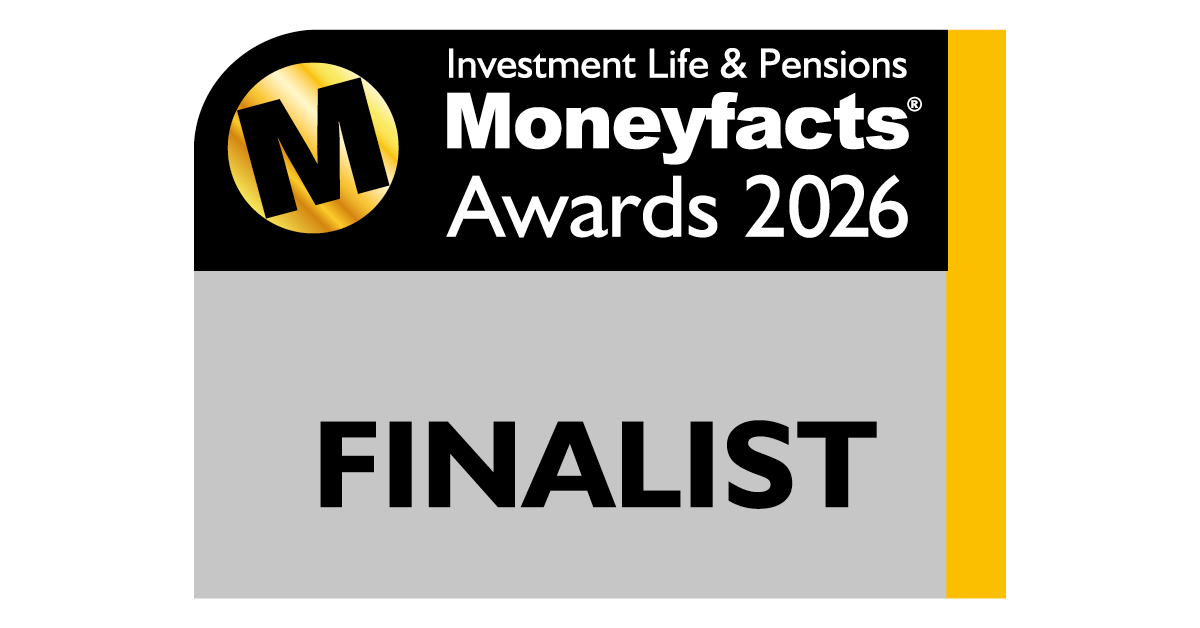
Moneyfacts Investment Life & Pensions Awards
Retirement Adviser of the Year 2026 - we have never won this (yet...), but we have been shortlisted 8 years running now, I think.
Money Marketing Awards
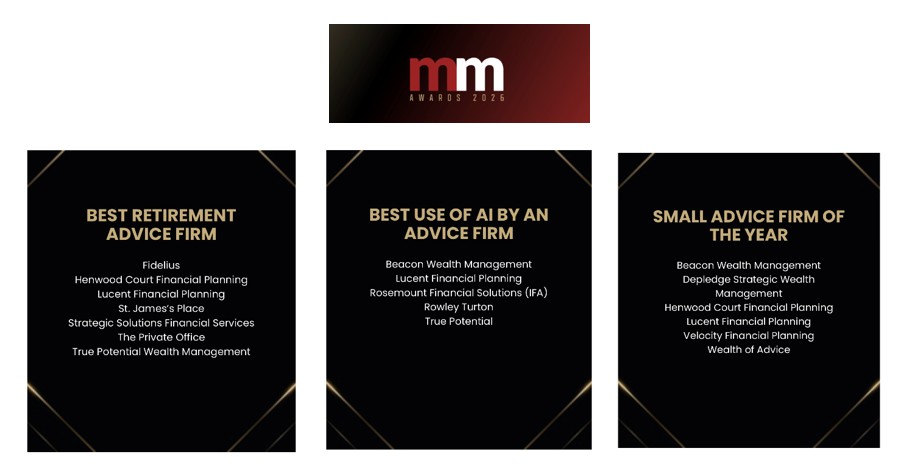
We are proud to have been shortlisted in 3 categories: Best Retirement Advice Firm, Small Advice Firms of the Year, and Best Use of AI by an Advice Firm
Awards and recognition from the profession are great, but the Vouched For awards are based solely on review by YOU! If you work with us that is. If you don’t work with us then do so and you can give us an awesome review too!
Read our reviews here: VouchedFor I Google
And because of that I value them far more.
As I do this...
As you may or may not know, my aim is that all our people (staff / clients / the world) do better in every way because we all work in partnership together.
This is based on Poseidon’s Trident!
(Not sure I have anything to demonstrate this... oh no, wait, here’s a nice visual for you!)

Anyway, this is a tough task!
So, I was delighted that we have been granted ‘great place to work’ recognition as this is based on an anonymous survey of all Lucenteers!
The third prong on the trident is whether we can be awarded B Corp status which is a long process and something we are currently working ourway through... Here’s hoping!
Juggling Mind and Money podcast
I’ve been doing this podcast for 2.5 years now but we only launched it 18 months ago and this month we surpassed 2500 Download on apple podcasts and Spotify. Which I am super pleased about.

But… with 1500 subscribers to this newsletter, and around 600 individual clients we take care of, I’d really like to ask you a favour!
Please check it out and you might just like it! It’s mainly quite funny apparently and we have some great guests on as well as Jess and I. I’d really like to be getting 250 downloads per episode. If half our clients did that, it would be great!
Tell ya friends!
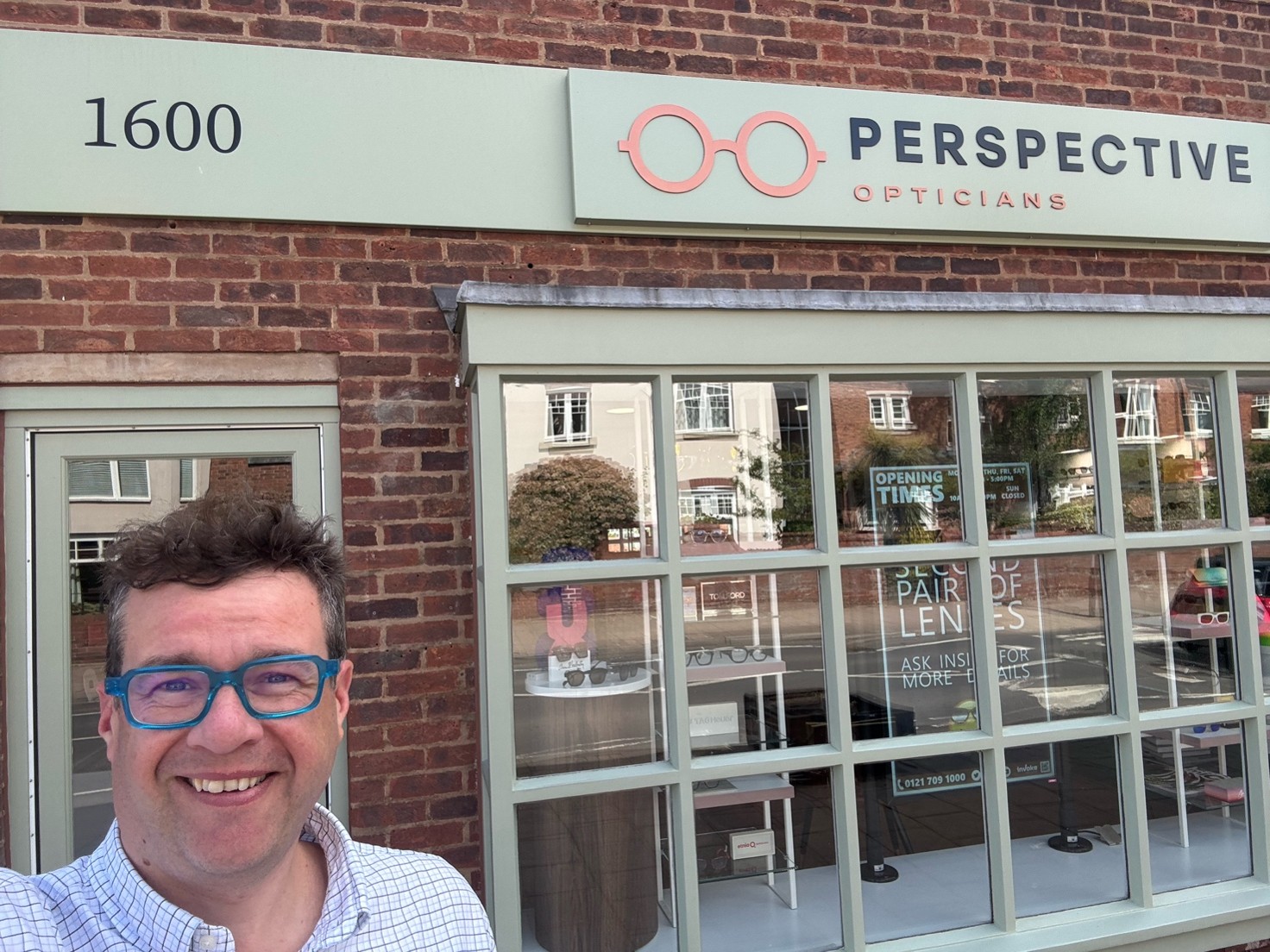
This month we had Dan Sanders, one of our clients and owner of Perspective Opticians of Knowle on our show. He also says he is a fan of the show! Hence how I managed to get him on! He might have changed his mind now.
Here’s me outside their clinic about to order my new specs! It’s a great experience for eye tests and some really stylish frames too!
I suggest you get down there to enable you to read any small print from your financial adviser 😳
Anyways… we discuss the pressures of being a small business owner and the uplifting bits too!
Here’s a clip, or you can listen to the full episode here!
Until next month my friends, have fun and enjoy yourself, it’s later than you think.
Disclaimer: This article does not constitute financial advice. We recommend that you speak to a qualified financial planner for advice tailored to your individual circumstances and goals. Financial markets may go up or down, and you are not guaranteed a return on your investment. Past performance is not necessarily a guide to future performance. Financial details including benefits to the treatment of tax will depend on your individual circumstances and, while checked at the time of publication, may be subject to change in future.
*When clicking a link to an external website, Lucent Financial Planning Ltd cannot be held responsible for the content of the external website.